The PV Leader Program
The "PV Leader Program" was launched in 2015 by the NEA to promote the manufacture and use of the latest technologies in solar energy Photovoltaic (PV) modules.
Among the various technical parameters, the modules must meet is that the conversion efficiency of polycrystalline and monocrystalline modules must exceed 16.5% and 17%, respectively.
For projects enrolled in the PV Leader program, NEA has assigned a third-party organization for:
- Monitoring and evaluating the entire process, particularly at the time of project acceptance
- Checking whether the committed target is achieved or not
- Announcing the result of evaluation after the plant has been running for one year.
Datong Projects - From Coal to Solar
The technology demonstration for the PV Leader Program has been developed around Datong City in Shanxi province, Northern China, on a former coal-mining site.
This resulted in thirteen PV plants, each with a capacity between 50MW and 100MW. Once fully operational, they are expected to generate 1.5 TWh of electricity per year, enough to save 480,000 tonnes of standard coal annually.
Importance of Solar Monitoring
The evaluation of the performance ratio (PR) of each plant is one of the most important indicators and, therefore, solar monitoring data of the sites play an extremely important role.
Power China and Beijing Solar & Sky Technology Limited carefully selected suppliers and equipment to provide all thirteen of the generating PV plants in Datong, and a central reference site, with an objective and very reliable solar monitoring system.
Irradiance Measurement Equipment
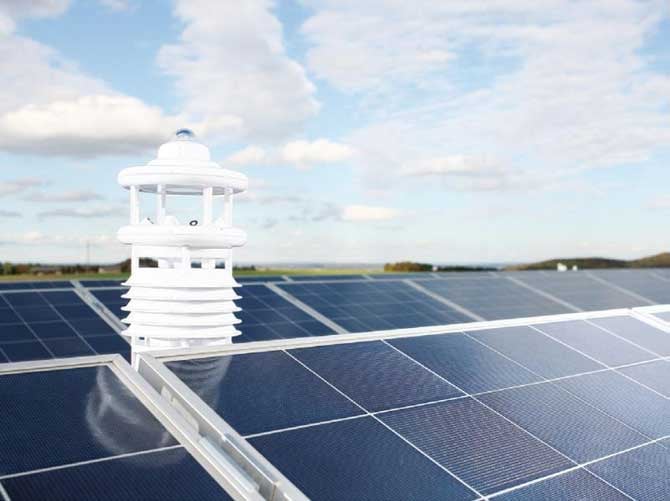
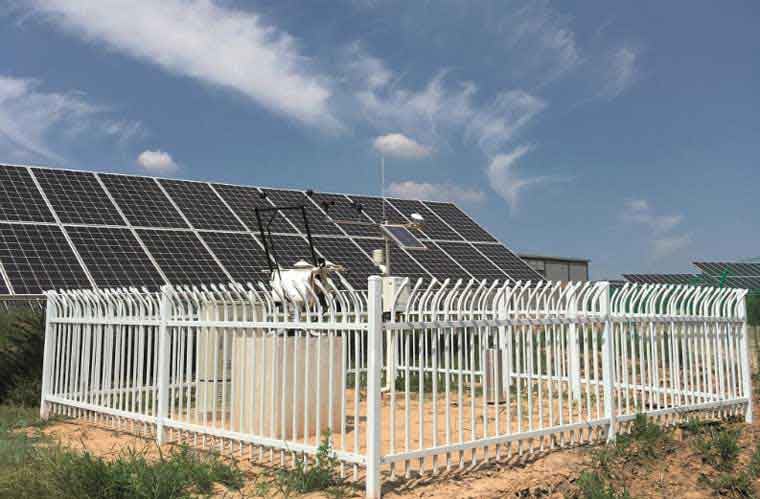
At each site, an identical solar monitoring station has been installed with some of the best instruments available. The basis of the station is a Kipp & Zonen SOLYS 2 sun tracker with sun sensor for active tracking and equipped with the CHP1 pyrheliometer and two CMP11 or CMP10 pyranometers.
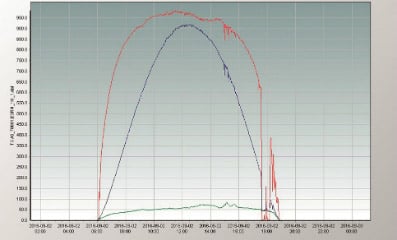
The whole system is built around the sun tracker and a data logger, with measurement of direct normal irradiance (DNI), diffuse horizontal irradiance (DHI) and global horizontal irradiance (GHI).
At the same time other parameters, such as ambient temperature and humidity, tilted global (plane of array, POA) irradiance, air pressure and precipitation, are also measured by individual sensors. All the data will be checked and analyzed using dedicated, user-friendly graphics based software.
Successful Installation by Power China and Beijing Solar & Sky
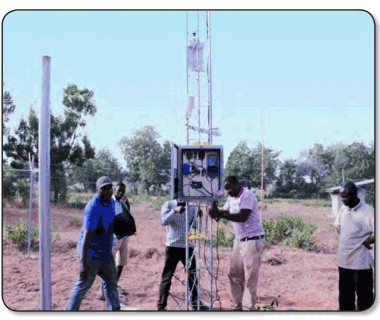
It took one and half months for the commissioning work by Power China and Beijing Solar & Sky, including processes of micro-site prospecting and installing all fourteen systems (one reference station and one on each of the thirteen PV plants).
Now the project can rely on the quality of Kipp & Zonen solar monitoring products to maximize the efficiency of the energy yield.